
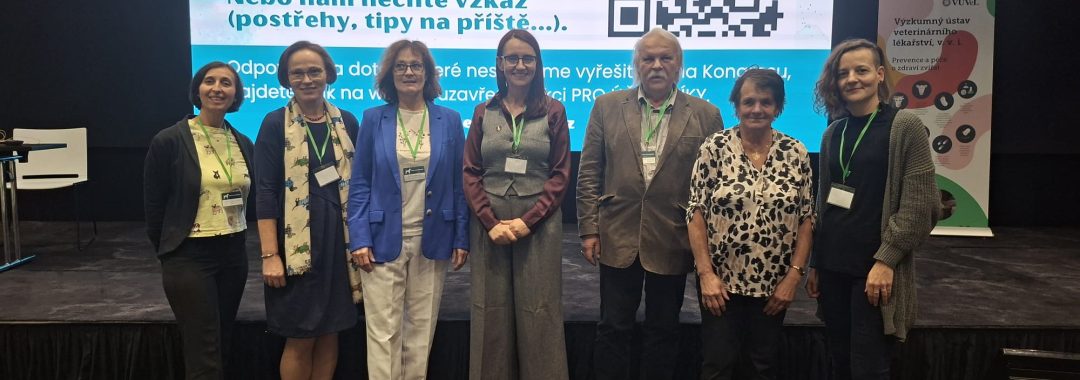
How does the gut microbiome affect a dog’s health? Can probiotics really help? And how can dog owners make sense of the ingredients in dog food and assess its quality? These and other related questions were at the heart of the first Vital Pes Congress, held on 4 November 2026 at the OREA Congress Hotel in Brno. The event, organised in cooperation with the Veterinary Research Institute (VRI), attracted nearly 200 participants, including veterinary surgeons, nutrition specialists, dog breeders and dog owners.
The aim of the congress was to bring the latest scientific knowledge into everyday dog care, providing participants with evidence-based information on nutrition, the gut microbiome and their impact on animal health. Women scientists from the Veterinary Research Institute (VRI) were responsible for a significant part of the congress’s scientific programme, presenting findings from research carried out as part of the National Centre for Biotechnology in Veterinary Medicine (NaCeBiVet) project.
The research activities of the VRI were outlined by Magdaléna Crhánová, Helena Juřicová, Miroslava Krzyžánková and Jiřina Marková. Their presentations focused on the importance of the gut microbiome for canine health and immunity, the potential applications of probiotics, modern methods for analysing microbial communities, findings from an experimental study investigating the effects of probiotics on the gut microbiome, and the composition and safety of commercial dog food. Participants thus had the opportunity to learn not only about the latest scientific findings but also about specific research results from the VRI and their potential practical applications. The findings presented are based on the VRI research activities, particularly the NaCeBiVet project, which brings together experts and research institutions to develop new biotechnological solutions for veterinary medicine. Transferring research findings into practice and making them accessible to both specialist and non-specialist audiences are among the key objectives of these activities.
The scientific programme was complemented by contributions from other specialists, who focused on the technologies used in the production of pelleted dog food, the differences between extruded, baked and cold-pressed pellets, raw feeding (BARF), and the links between food composition and canine health. The programme also featured a presentation of the Red Paw (Červená tlapka) initiative, which promotes blood donation among dogs and cats.
The first edition of the congress received an extremely positive response. The individual presentations prompted numerous questions and lively discussions, which continued during breaks and informal meetings. We are delighted that interest in the topics presented has continued even after the congress. Participants continue to contact the VRI researchers by email with follow-up scientific questions, requests for further information and suggestions for possible collaboration. This feedback confirms that scientific research findings have a clearly defined audience and that
presenting them in an accessible way can generate interest and stimulate further professional discussion.
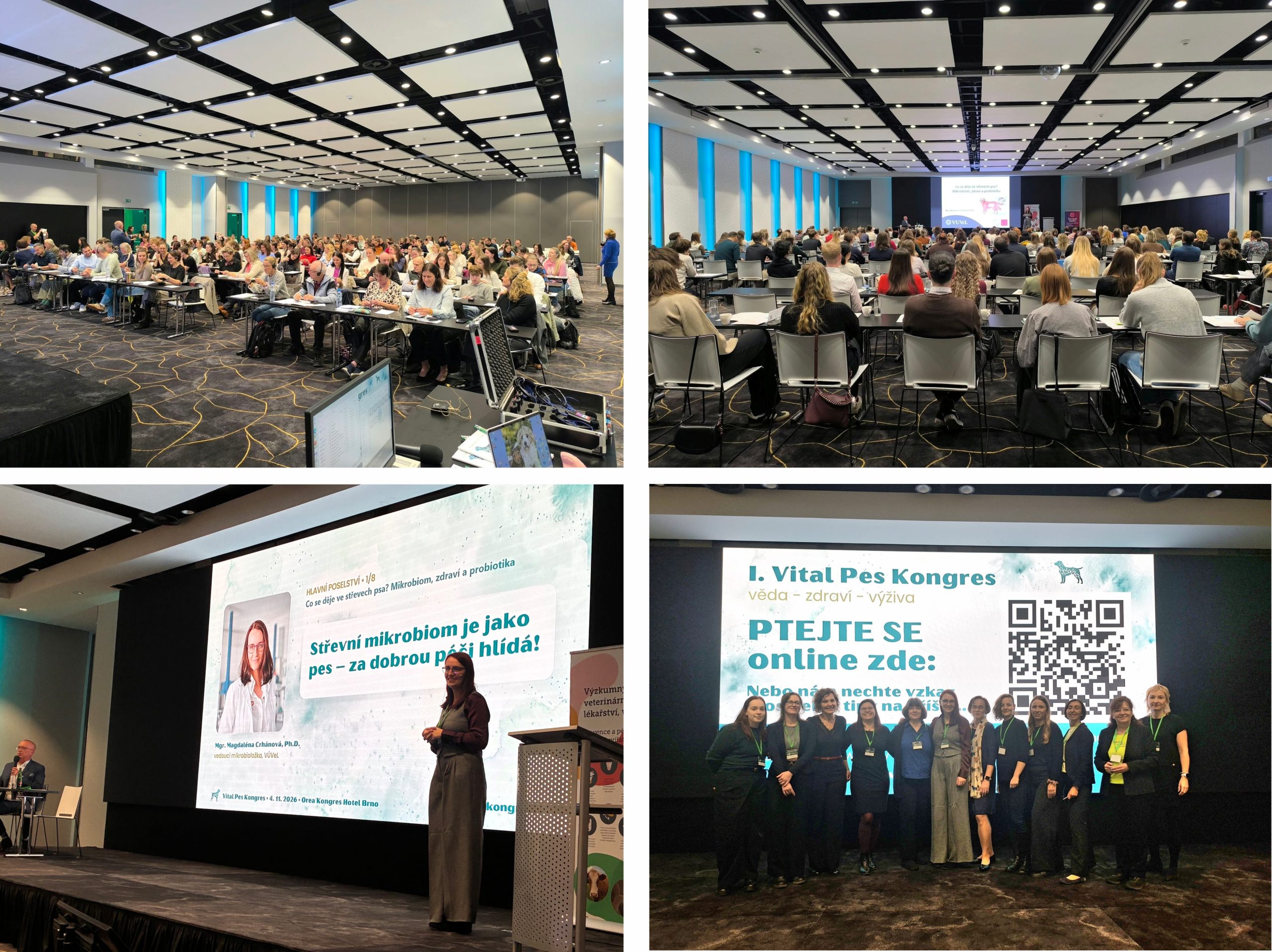
For VRI, the congress provided a valuable opportunity to share research findings beyond the academic community, discuss their practical applications and establish new professional contacts. The strong interest shown by participants, together with the follow-up communication, also highlights the importance of long-term cooperation between research institutions, veterinary surgeons and the dog breeding community The Vital Pes Congress thus demonstrated the value of connecting scientific research, veterinary practice and an informed public. A better understanding of the relationships between nutrition, the gut microbiome and animal health can contribute to improved care for dogs and more responsible decisions about their diet. For more information about the congress, please visit www.peskongres.cz