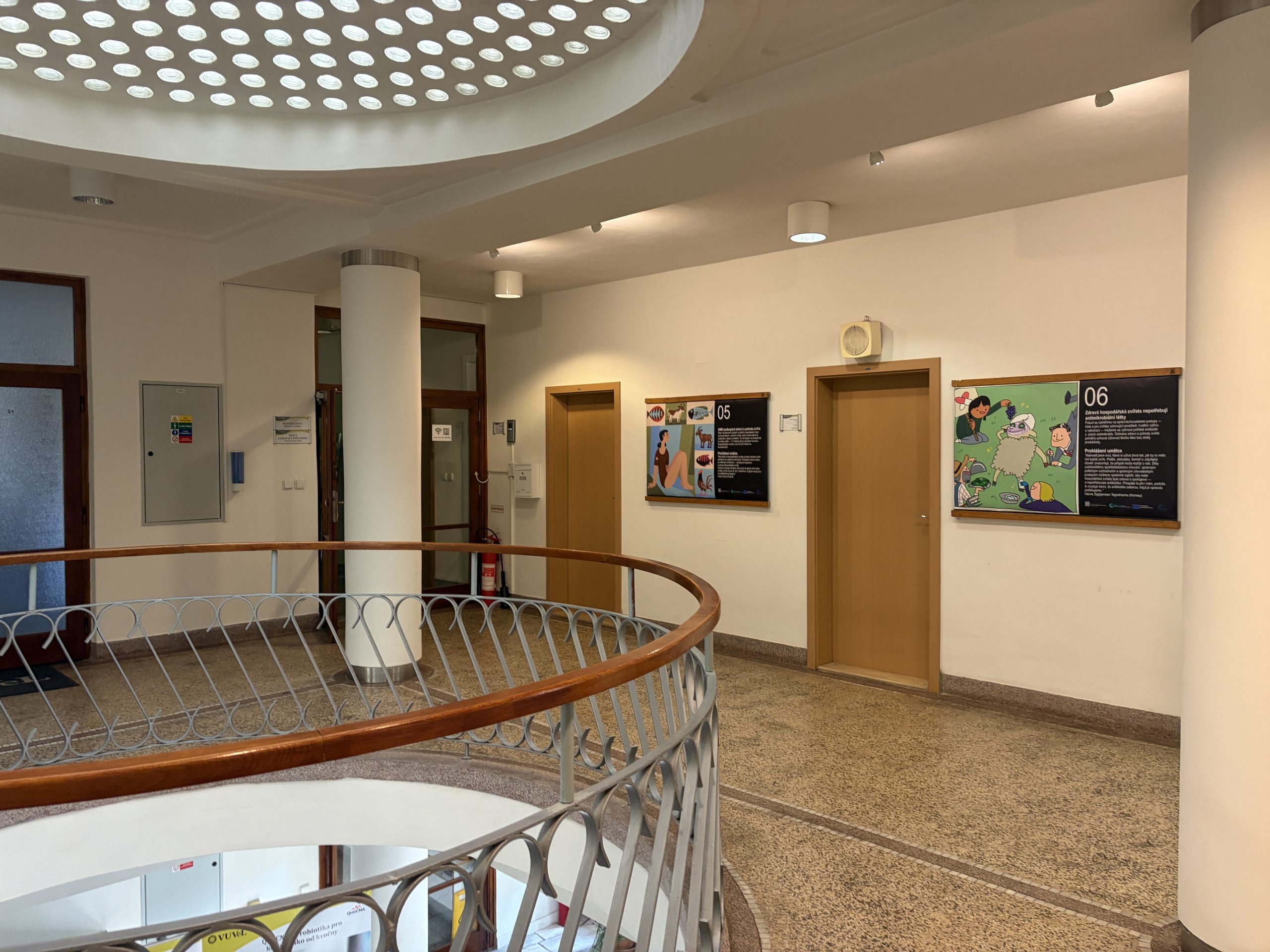
How can we make the public more aware of antibiotic resistance, an issue that may not be immediately apparent but has implications for everyone's health? One way is to combine scientific knowledge with the power of visual art. This is the idea behind the European initiative Sketching Antimicrobial Resistance, which also brought a selection of its artworks to the Veterinary Research Institute (VRI).
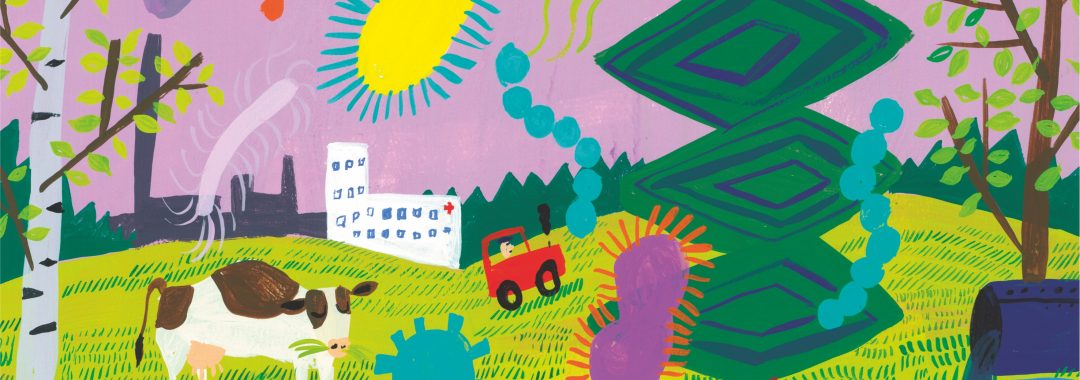
The project Sketching Antimicrobial Resistance: Thirty Stories, One Health was developed as part of the European initiative EU-JAMRAI 2. Thirty illustrators from 30 European countries took part in the project, using their artwork to make the issue of antimicrobial resistance more accessible to the general public.
The individual illustrations highlight a range of topics, from the proper use of antibiotics and the prevention of infectious diseases to the spread of resistant microorganisms among people, animals and the environment. Their common aim is to translate often complex scientific information into a clear and visually accessible format.
The project also includes a travelling exhibition, which is visiting cities across Europe throughout 2026, presenting all 30 artworks to the public. VRI staff and visitors also had the opportunity to view a selection of works from this collection.
Discover more about the exhibition here: https://eu-jamrai.eu/raise-awareness/campaigns/sketching-antimicrobial-resistance/
EU-JAMRAI 2 (European Joint Action on Antimicrobial Resistance and Healthcare-Associated Infections) is a joint European initiative aimed at tackling antimicrobial resistance and healthcare-associated infections.
Its aims are to strengthen cooperation between European countries, promote the responsible use of antimicrobials, improve infection prevention and raise awareness of antimicrobial resistance.
The initiative is based on the One Health approach, which emphasises the interconnectedness of human, animal and environmental health. This is why addressing this issue requires the involvement not only of medical doctors and veterinary surgeons, but also microbiologists, scientists, farmers, public health professionals and other specialists.