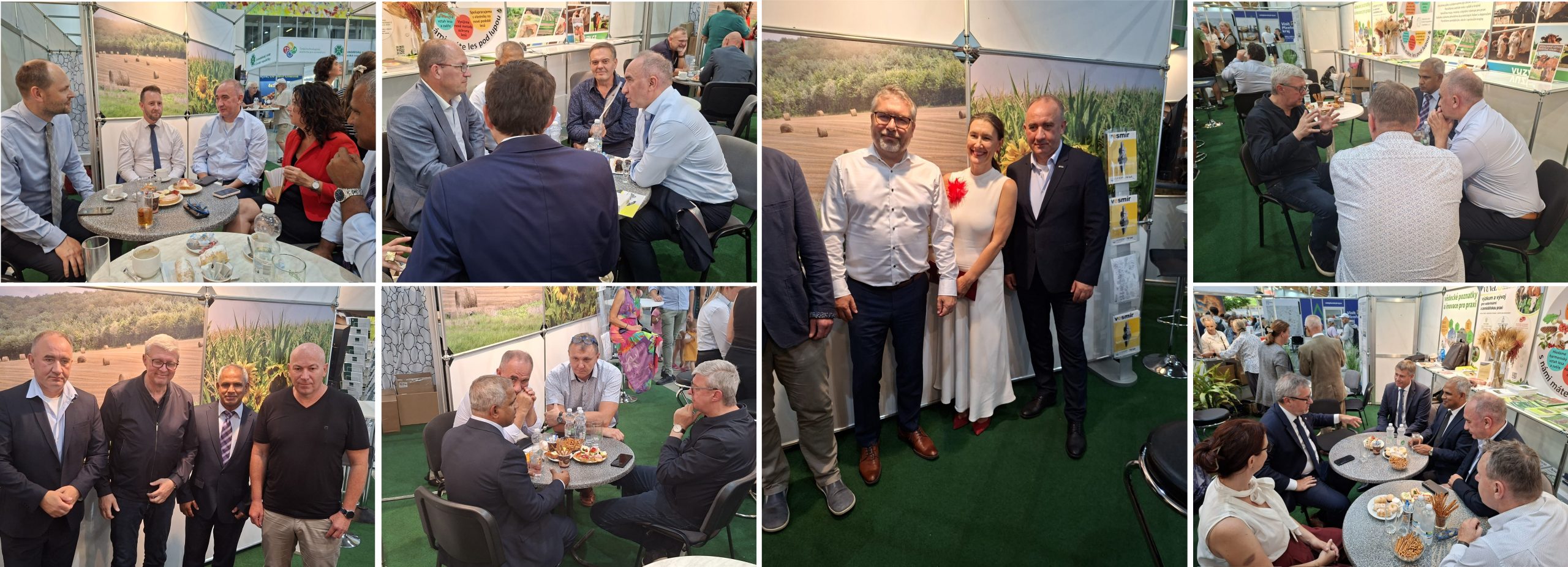
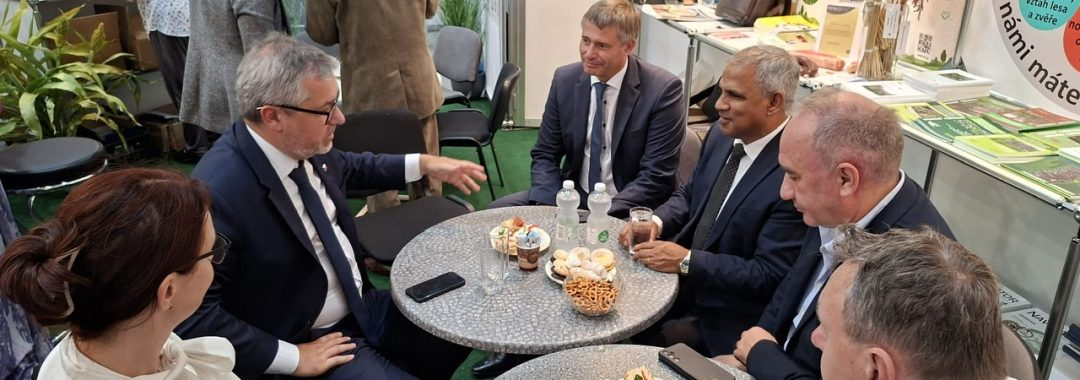
The Veterinary Research Institute (VRI) once again participated in the international agricultural fair Země živitelka in České Budějovice this year. The 52nd edition of the fair provided the Institute with an opportunity not only to present the results of veterinary research and their practical applications, but also to engage in discussions with representatives of the state administration, universities, professional and breeders’ organisations about the future of Czech research, its funding, and the needs of agricultural practice. Another key objective of the Institute’s participation was to raise awareness of its work among the wider agricultural community, highlight the practical applications of its research, and build new connections with breeders, farmers, agricultural advisors, and other stakeholders across the agricultural sector. Close contact with the users of research results is essential to ensure that research can respond to the current needs of practice while also delivering solutions well ahead of future challenges.
One of the highlights of this year’s fair was the presentation of the Golden Ear Award to the certified methodology “Metabolomics in the Fight Against the Illegal Use of Anabolic Steroids in Pig Production", developed by Kamil Šťastný and his team at the VRI.
An important part of the VRI’s participation this year was a series of meetings with representatives of the state administration, research and educational institutions, professional associations, as well as the wider agricultural and farming community. Discussions focused not only on current challenges facing agriculture and veterinary medicine, but also on the future direction of Czech research and the conditions needed for its continued development. In discussions with Karel Havlíček, Minister of Industry and Trade and Chairman of the Government Council for Research, Development and Innovation, representatives of the Institute focused on research funding and the government’s vision for the future direction of Czech research. Representatives of the VRI also met with Minister of Agriculture Martin Šebestyán, Deputy Minister Jaroslava Špalková, and Deputy Minister Oldřich Černý to discuss the importance of research for the Czech agricultural sector. In this context, representatives of research organisations also highlighted the lack of adequate systemic funding mechanisms for the renewal and development of infrastructure at public research institutions.
Cooperation with universities was also an important topic. Discussions with Pavel Kozák, Rector of the University of South Bohemia, Martin Klimánek, Rector of Mendel University in Brno, and his Vice-Rector Jiří Skládanka focused on opportunities for further professional cooperation, as well as on the involvement of VRI staff in the education of undergraduate and postgraduate students in the context of the amendment to the Higher Education Act.
In discussions with Jan Radoš, Head of Precision Agriculture, Research and Education Department, and Jan Adamec, Head of the NAZV Department, the focus
was on the National Agency for Agricultural Research’s planned calls for proposals for 2027 and on preparing institutions’ activity plans for the next five-year period under institutional support funding.
These topics were further explored through meetings with representatives of the agricultural and livestock sectors. Discussions with Jindřich Fialka, Senior Director of the Food Industry Section at the Ministry of Agriculture and Food Ombudsman; Martin Pýcha, Chairman of the Agricultural Association of the Czech Republic; Kamil Malát, Director of the Czech Beef Breeders Association; and Zdeněk Nekula, Chairman of the Czech Beekeepers Association, focused on issues that could be taken into account in preparing the VRI’s Long-Term Conceptual Development Plan for the period beginning in 2028. The aim is to ensure that planned research activities are driven by the specific needs of individual sectors while addressing challenges whose full impact may only become apparent in the years to come.
Specific opportunities for professional cooperation were also discussed with Petr Míša, Director of the Agricultural Research Institute Kromeriz, Ltd. The discussions focused primarily on evaluating the potential use of protein crops in livestock nutrition. Representatives of the Institute discussed the further development of cooperation with Jiří Michalisko, Director of the Czech-Moravian Association of Agricultural Entrepreneurs, building on the memorandum already signed between the two organisations. Preparations were then initiated for a separate working meeting between VRI representatives and Jan Doležal, President of the Agrarian Chamber of the Czech Republic.
This year’s Země živitelka once again demonstrated the importance of face-to-face meetings between researchers and not only those who shape the conditions for Czech research, but above all those who apply its results in their everyday practice. Research cannot simply respond retrospectively to problems that have already arisen. It must identify emerging needs and risks in time, anticipate future challenges, and offer solutions that are practical, scientifically well-founded, and sustainable in the long term.
For VRI, the agricultural fair therefore represents more than an opportunity to present research results achieved. It also provides an opportunity to introduce research to the wider agricultural community, gaining a better understanding of its needs, and establishing contacts that can lead to new research topics and specific forms of cooperation. Země živitelka is also an important platform for gathering insights and jointly exploring the future direction of veterinary and agricultural research. We would like to thank everyone who visited our exhibition, met with our experts, and showed an interest in exploring new opportunities for cooperation with us.